
John MacLean

Common Private Money Loan Mistakes Real Estate Investors Should Avoid
The most common private money loan mistakes are an untested exit strategy, the wrong value basis, and an unchecked lien position. A private money loan is real estate financing from a private lender, qualified mainly on the property’s value rather than the borrower’s income or credit. Two groups of people touch every one: the borrower who takes it and the
How Private Money Lenders Evaluate Value-Add Commercial Deals
Banks underwrite to current performance, which disqualifies value-add commercial deals by definition. If you’re acquiring a 12-unit apartment building at 60% occupancy or a retail strip with three vacant units, there’s no trailing NOI that supports conventional financing — that’s the entire point of the acquisition. Private money commercial real estate loans exist specifically for this gap: they fund the

Private Lender vs Bank: When Each Makes Sense
Choosing between a private lender and a bank comes down to one question: does your deal require speed and flexibility, or does it qualify for the lower cost of conventional financing? The trade-off runs across three axes: cost, speed, and flexibility. Every deal lands somewhere different on all three. Private lenders close in 7 to 14 days and qualify the

Maximizing Tax Benefits with Owner-Occupied Building Financing
Note: This article covers general educational information about tax benefits. It is not tax, legal, or financial advice. Consult a licensed CPA or tax advisor before making financing or tax decisions. Owner-occupied building financing creates five tax benefits that leasing cannot replicate: the mortgage interest deduction, building depreciation, accelerated write-offs on improvements, property tax and operating expense deductions, and long-term

How Equity Financing Can Fuel Your Business Growth
Equity financing fuels business growth by turning ownership or asset value into capital you can deploy. There are two routes. The first sells a share of your company to investors. The second borrows against the equity in real estate you already own, which raises capital without giving up any ownership. For California business owners who hold commercial or investment property,
Residential Income Property: 6 Strategies to Boost ROI
A residential income property generates return through six levers that compound independently over the hold period. The 6 strategies to boost ROI are: optimizing loan structure, using built-up equity for portfolio growth, executing targeted value-add renovations, retaining quality tenants, setting rent against market comps, and operating the asset through property management technology. Each strategy acts on a specific ROI metric,

What Are the Essential Commercial Loan Documents Needed for a Smooth Application?
Applying for a commercial real estate loan can open doors to new investments, property improvements, or refinancing opportunities. But the path to funding begins with your paperwork. Knowing which commercial loan documents are essential for your loan application can make the process faster, easier, and more successful. At Fidelity Mortgage Lenders, we aim to simplify that process for you. Unlike
Fidelity Mortgage Lenders at the 2025 Western States CREF Conference
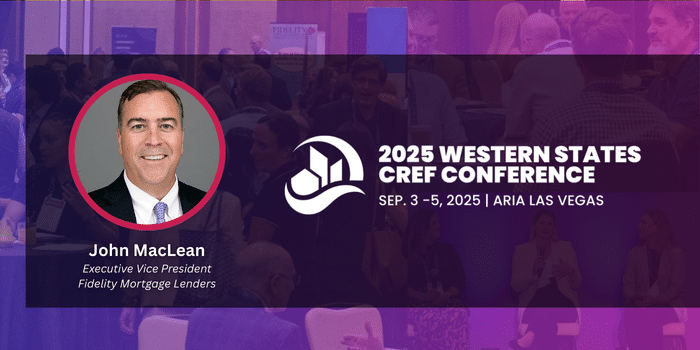
Fidelity Mortgage Lenders at the 2025 Western States CREF Conference We’re proud to share that John MacLean, Executive Vice President at Fidelity Mortgage Lenders, Inc., will be one of the featured speakers at the 2025 Western States CREF Conference. The Western States CREF Conference is one of the premier gatherings for commercial real estate finance professionals, bringing together industry leaders,

Private Lenders vs Banks: What’s Better for Your Commercial Real Estate Loan?
If you’re investing in commercial real estate, there’s one critical decision you’ll need to make early on. Whether it’s a retail center, multifamily building, or office space, you should think about whether you’ll borrow from private lenders vs banks, the latter being the more traditional option. Both options can help you finance your next acquisition or refinance an existing loan.

California Department of Real Estate – Real Estate Broker No. 00388229 |Corp NMLS ID # 1726526
Non-consumer, Business Purpose Loans secured by commercial or residential property.